Hogfish on Hook and Line: Shrimp, Crab, and a Chum Slick
Hogfish have a reputation as a spearfishing target first and a hook-and-line fish a distant second — and there’s a real reason for that. They’re bottom-rooters, not chasers, and a lot of the time a diver looking them in the eye has an easier read on the fish than someone waiting on a bite topside. But a genuine rod-and-reel bite does exist for hogfish, and it’s built entirely around matching what they actually eat and putting it exactly where they live.
Why hogfish are a different kind of bottom fish
Hogfish are wrasses, and they feed by rooting through sand and structure for crabs and mollusks rather than chasing down bait in the water column. That single fact should shape everything about how you fish for them: forget speed and flash, and think about presenting something that looks like it belongs on the bottom, sitting right where they’re already grubbing around — tight to rocks, ledges, and patch reef, not out in open sand.
Where to find them
Hogfish get talked about as a Florida Keys specialty, but they’re a real, resident fish on South Carolina live bottom and reefs — not a stray or a bonus catch. Ask around at any dive shop on the Grand Strand or out of Charleston and you’ll hear the same thing: spearfishermen and divers working near-shore ledges and live bottom get hogfish regularly, often as a top target, because sight-fishing plays right into how the species feeds and hides. That’s a good signal for hook-and-line anglers too — if divers are consistently seeing and shooting hogfish on a piece of structure, there are fish sitting right there for a bait dropped tight to the same ledges and rocks. Look for the same kind of bottom the dive community targets: live bottom, ledges, and near-shore reef with some vertical relief, not flat open sand.
Bait: shrimp and crab, presented naturally
Match the diet. Live or fresh dead shrimp and small crabs — whole or cut into pieces sized to the hook — are the standard, and for good reason: it’s exactly what a hogfish is already rooting around for. Keep the bait presentation simple and natural rather than heavily rigged; a hogfish inspecting bait in clear water isn’t fooled by hardware. Small, strong hooks matter here too — hogfish have small mouths built for picking crustaceans out of crevices, not inhaling big baits, so oversized hooks cost you bites you never feel.
Working a shrimp-head chum mix
Some hogfish anglers work a chum mix of shrimp heads and shells, sometimes cut up with the bait itself, worked into a mesh bag or hand-fed over structure to draw fish out of holes and cracks and up onto a bait they can see. It’s not a universal must-do the way chumming is for something like cobia, but it fits the logic of the fishery: hogfish already key on the scent of crustaceans breaking down on the bottom, and a shrimp-head slick over a piece of structure gives them a reason to come out and investigate rather than staying tucked in a crevice. Treat it as a tool worth trying on structure you already know holds fish, not a substitute for finding the right bottom in the first place.
Rigging and rod work
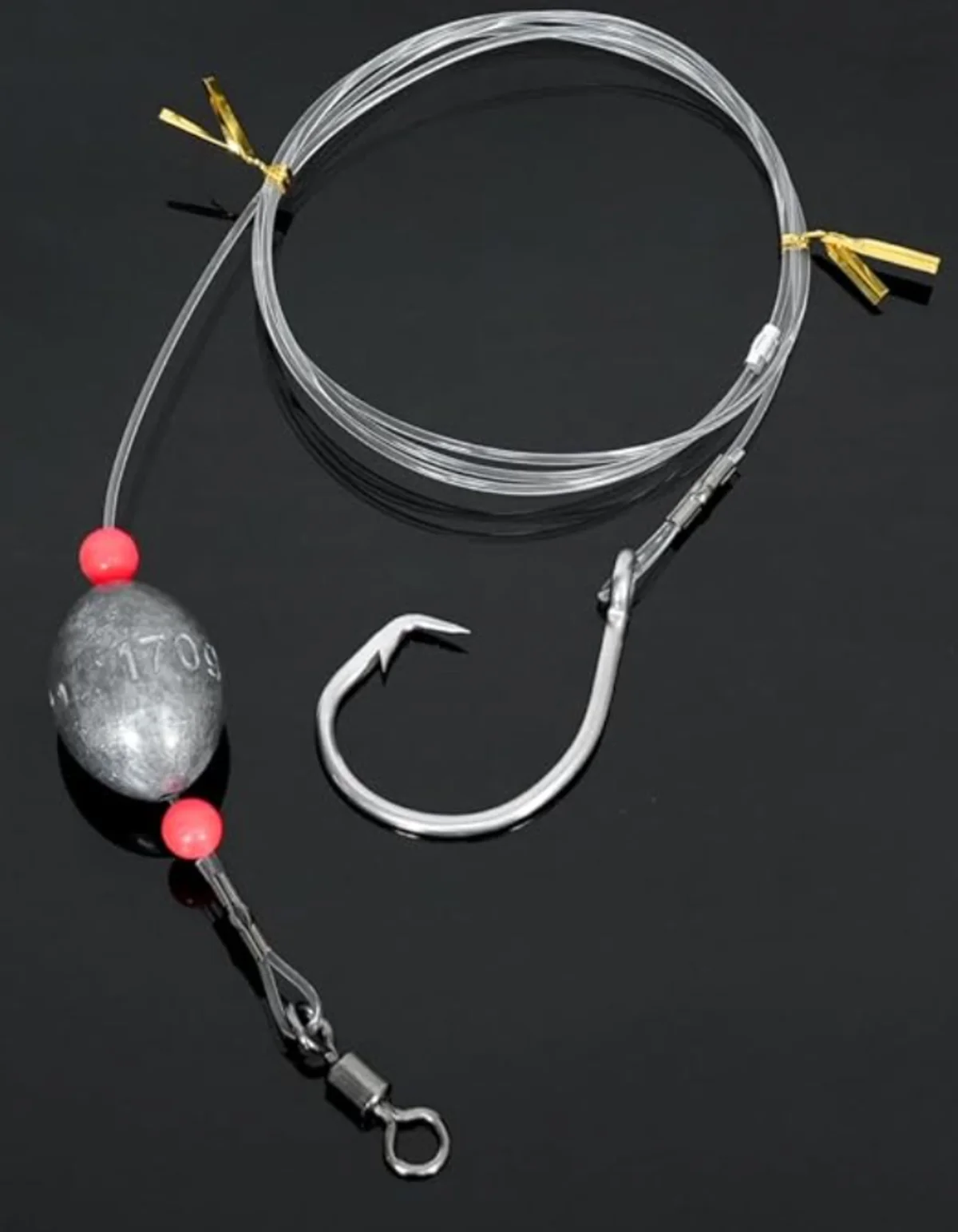
A knocker rig or a light fish-finder rig, with just enough weight to hold bottom in the current, keeps you in direct contact with a bite that’s often a series of soft pecks rather than a hard take. Light fluorocarbon leader helps in the clear water hogfish tend to favor — they can be leader-shy the same way other structure-oriented reef fish are. Patience matters more here than with most bottom species: let the pecking continue and set when you actually feel weight, not on the first tap, since a hogfish nosing at bait can tap it several times before committing.
Know the regs before you keep one
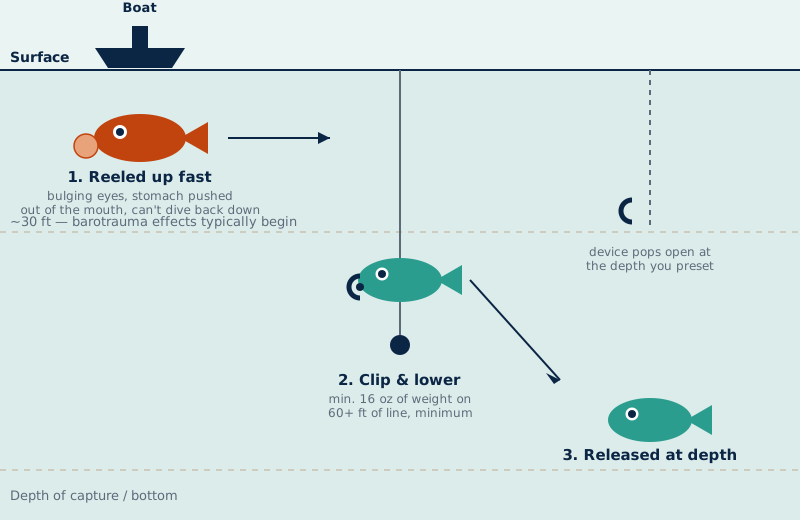
In South Carolina state and adjacent South Atlantic federal waters (the same rules apply across NC, SC, and GA), hogfish currently run a 17-inch fork length minimum and a 2-fish bag limit, with the season open. Hogfish fall under SAFMC’s snapper-grouper complex, which means the standard snapper-grouper gear rules apply too: a descending device must be aboard and rigged (at least 16 oz of weight, 60 feet of line), non-stainless hooks are required with natural bait, and non-offset circle hooks are required north of 28°N when fishing natural bait — which covers all of South Carolina. These numbers move, so check current size, bag, and season with SCDNR or SAFMC before you plan a trip around keeping fish.
Bottom line
Hogfish reward anglers who think like the fish: crab and shrimp instead of flash, tight to structure instead of open bottom, and patience for a bite that announces itself in pecks instead of a hard take. It’s a slower game than most bottom fishing, but a hogfish on ice is one of the better tables you’ll set from anything you catch offshore.
Hogfish regulations fall under SAFMC’s snapper-grouper management and change over time — verify current size, bag, and season limits with SCDNR or SAFMC before you go, and make sure you’ve got the required descending device and circle hooks aboard.
This article may contain affiliate links. If you buy through them, we may earn a small commission at no extra cost to you. Learn more.