Boat Trailer Maintenance: What Actually Fails on the Highway
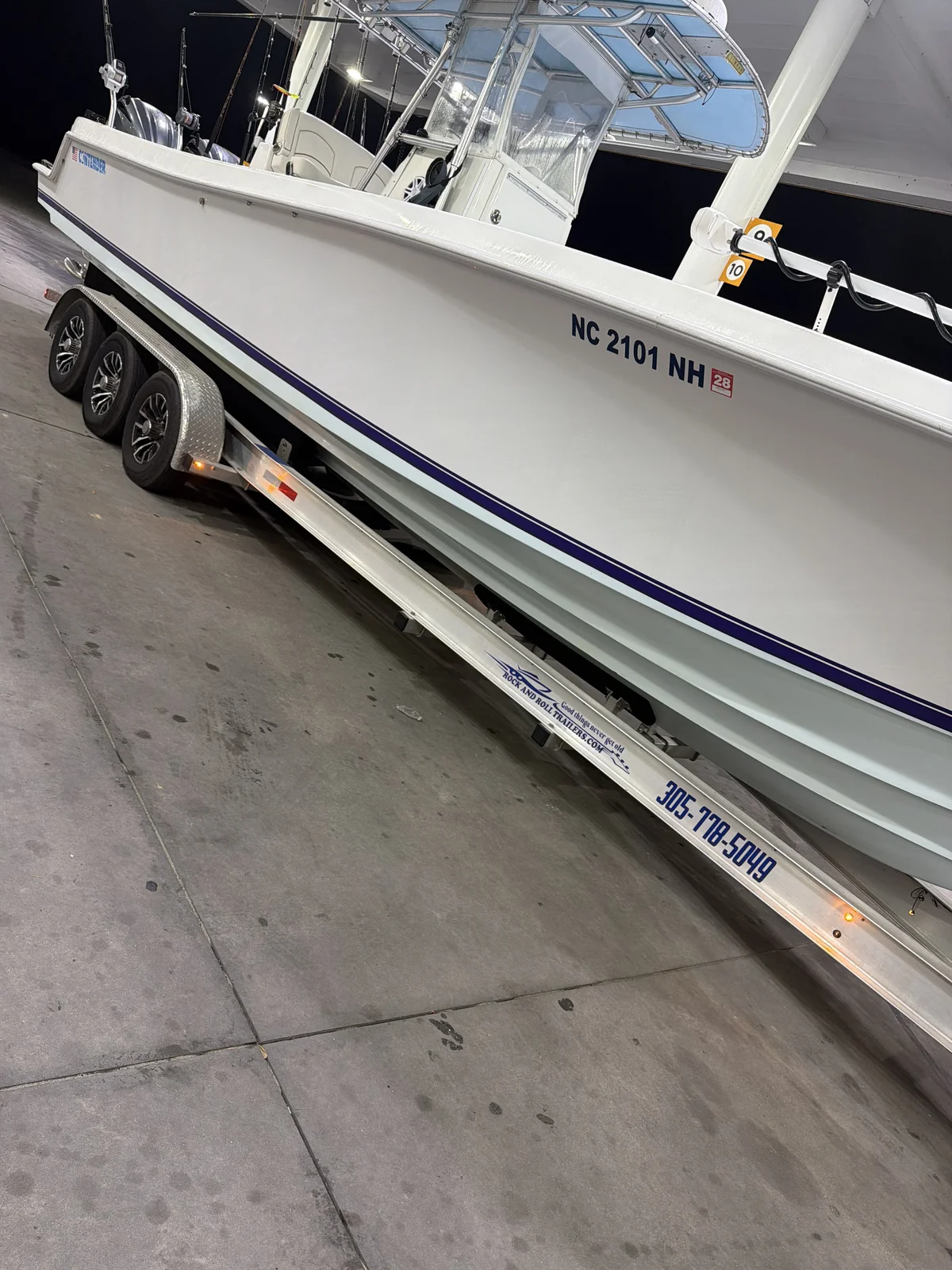
Every article on this site assumes the boat actually made it to the water. The trailer is the part nobody thinks about until it fails on the interstate at 65 mph with a boat behind it — and a saltwater ramp is a uniquely hard environment for a trailer compared to one that just sits in a driveway between trips.
Why saltwater trailers need marine grease, not automotive grease
Standard automotive wheel bearing grease is built for a sealed, dry environment. Every time you back a hot trailer into cool saltwater to launch or retrieve, the hub contracts and “breathes,” drawing water in past the seals — and standard lithium grease breaks down and washes out when it meets that water, leaving the bearing running dry or corroding from the inside. Marine-rated grease is formulated specifically to resist that washout and stay cohesive even after repeated dunking. A trailer that never sees water can often get away with automotive grease for longer; a boat ramp trailer can’t.
Bearing protection: three systems, one clear winner for saltwater
Bearing Buddy / EZ-Lube style spring-loaded caps let you pump fresh grease in from the outside without pulling the hub apart, and the spring keeps steady pressure that helps purge water out as you grease. This is the system built for someone dunking a trailer every weekend — check the little rubber bladder for damage now and then, but the maintenance itself takes two minutes with a grease gun.
Sealed (oil-bath or cartridge) bearings run more consistently and need less frequent attention, but they’re harder to inspect and expensive to replace as a full unit if a seal ever fails — not the easiest system to service yourself at the ramp.
Traditional pack-and-seal bearings are the cheapest parts, but they require full disassembly to repack, which is impractical for anyone launching regularly and carries the highest risk of water sneaking in between services.
For a saltwater fishing boat, EZ-Lube is the practical answer — it’s the system built around the exact problem a boat ramp creates.
How often, and what to watch for
A trailer that’s dunked regularly should get greased or at least checked every one to three months, or roughly every six trips to the ramp — more often than the “once a season” advice that’s fine for a dry-stored trailer. Warning signs that mean stop and check now, not at the next scheduled service: a grinding or growling noise from a wheel, any wobble when you rock the tire top-to-bottom, a hub that’s noticeably hotter than the others after towing, or grease that comes out milky, gray, or gritty when you check it — all three are signs water has already gotten in.
The grease I keep in the truck is Lucas Oil Marine Grease — a cheap, well-reviewed 14-ounce cartridge that loads straight into a standard grease gun and works with EZ-Lube fittings. It’s not a complicated product; it just needs to actually be marine-rated, and this is.
The tire problem nobody expects: age, not tread
Trailer tires (ST-rated, for “Special Trailer” service) fail differently than the tires on your truck. A trailer tire often sees a fraction of the mileage a car tire does, but it sits in the sun between trips for weeks at a time, and UV and heat break down the rubber compound and sidewall long before the tread ever wears out. A tire that looks fine — plenty of tread, no visible damage — can still blow out from age-related dry rot. Check the DOT date code on the sidewall (the last four digits are the week and year of manufacture) and plan on replacing ST tires every 3 to 5 years regardless of how much tread is left. Waiting for the tread to wear out is planning around the wrong failure mode entirely.
Catching a slow leak before it’s a blowout
Here’s the problem with a soft trailer tire: you can’t feel it. A soft tire on your truck changes the way the truck handles: a soft tire on the trailer behind you doesn’t, right up until it overheats and blows out doing highway speed. A trailer tire pressure monitoring system solves that blind spot directly. The Tymate TM2 is a real option worth a look — four waterproof sensors that thread onto the valve stems, a solar/USB-charged color display in the cab, and monitoring for up to 10 tires if you’re running a tandem-axle trailer plus a spare. No phone app or Wi-Fi pairing needed, which matters when you’re setting this up once and don’t want to fight a Bluetooth connection every trip. At roughly $60, it’s cheap insurance against the single most common trailer failure on a long tow.
Other saltwater corrosion spots worth checking
The frame usually survives salt exposure fine if it’s galvanized or aluminum, but the fasteners, axles, and brake components don’t get the same protection. If your trailer has surge or electric brakes, rinse the actuator and magnets with fresh water after every saltwater dunk — corrosion there is a slow, expensive failure. Wiring connectors and light housings are the other classic weak point: dielectric grease on every connector and sealed LED lights instead of old-style incandescent housings both go a long way toward not troubleshooting a dead taillight in a parking lot before a trip.
I coat the whole frame — fasteners, axles, brake components, the works — with Fluid Film a few times a season. It’s a lanolin-based spray rather than a hard coating, so it never fully dries out, keeps penetrating into joints and threads, and doesn’t need to be reapplied constantly the way a lot of spray lubricants do. Cheap insurance against exactly the slow corrosion that eats brake hardware and fasteners on a trailer that lives at the coast.
Bottom line
None of this is complicated or expensive — a tube of the right grease, a tire age check, and a $60 pressure monitor cover the three things most likely to strand a boat on the way to or from the water. It’s unglamorous maintenance, which is exactly why it’s the kind of thing that gets skipped until it’s a breakdown on the shoulder instead of a five-minute check at home.
This article may contain affiliate links. If you buy through them, we may earn a small commission at no extra cost to you. Learn more.