NMEA 0183 Setup Guide: Wiring, Multiplexers, and What Still Uses It
NMEA 0183 is the standard almost nobody sets out to install anymore, but a huge number of boats are still running it somewhere — an older GPS, a legacy autopilot, a depth sounder that predates NMEA 2000, or even a current-generation handheld VHF radio, since 0183 remained the default for handhelds long after fixed-mount gear moved on. This is the guide for the boat that already has some of this wiring and needs to understand it, or the boat adding one 0183 device to an otherwise modern network. For how this fits alongside NMEA 2000 and marine Ethernet, start with the networking overview.
How NMEA 0183 actually works
NMEA 0183 is a serial connection — electrically, it’s RS-422, running at a standard 4,800 baud (a “High Speed” variant runs 38,400 baud, mainly used for AIS). Every 0183 device is either a talker (something broadcasting data, like a GPS) or a listener (something receiving it, like a chartplotter), and the wiring is genuinely simple: a talker’s output pair connects to a listener’s input pair, full stop. One talker can feed multiple listeners on the same wire — that part works fine — but 0183 was never designed to combine multiple talkers onto a single listener’s port. That limitation is the single biggest thing that trips people up.
The mistake: trying to combine two talkers
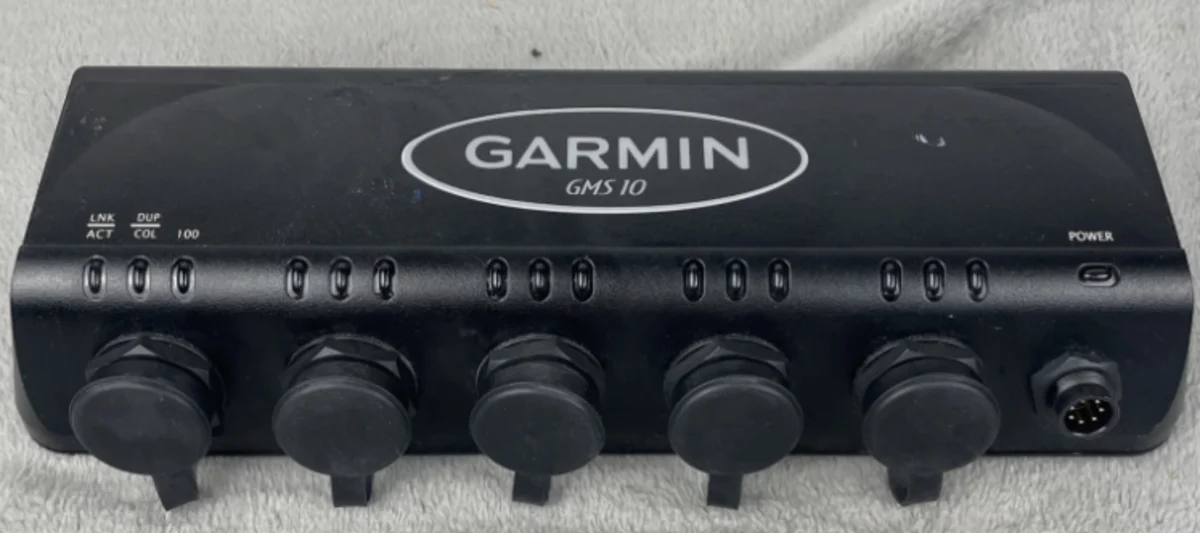
If you have an old GPS and an old depth sounder, both speaking 0183, and only one 0183 input on your chartplotter, you cannot just splice both talkers’ output wires together and feed them into that one input. Two talkers transmitting at once on the same pair collide and corrupt each other’s data — it doesn’t work, and it isn’t a wiring-skill problem, it’s how the electrical standard functions. This is exactly the situation a multiplexer solves: it takes multiple 0183 talker inputs, combines them intelligently (reading each one’s sentences and interleaving them without collision), and outputs a single clean 0183 (or Ethernet) stream that one listener port can read. A real example: the Actisense PRO NMEA 0183 Multiplexer takes 5 separate 0183 inputs down to 2 ISO-Drive outputs plus an Ethernet connection — the standard tool for exactly the “too many old talkers, not enough listener ports” problem.
Dos and don’ts
Do check whether a device is actually talking standard 0183 sentences before assuming it’ll work with anything else on the boat — some older or proprietary gear used non-standard variants that a modern multiplexer or chartplotter won’t parse correctly.
Do use a multiplexer the moment you have more than one 0183 talker and only one listener port available — it’s a cheap fix compared to troubleshooting garbled or missing data for hours.
Do keep 0183 wiring runs reasonably short and away from sources of electrical noise (bilge pumps, engine wiring, VHF antenna cable) — it’s a low-voltage serial signal and it’s more susceptible to interference than NMEA 2000’s differential signaling.
Don’t try to feed two talkers into one listener input directly. It will not work reliably, if at all.
Don’t assume a device labeled “NMEA compatible” is automatically 0183 — confirm which standard (0183 vs. 2000) before buying cable or adapters, since the connectors and wiring are completely different.
Don’t throw out working 0183 gear just because it’s “old” — a lot of legacy instruments and handheld VHF radios are perfectly reliable, and 0183’s simplicity is actually an asset for a single point-to-point connection that doesn’t need to talk to a whole bus of other devices.
What data typically runs on NMEA 0183
Position and course data from an older standalone GPS, legacy AIS receivers (particularly Class B units from the pre-NMEA 2000-AIS era), older autopilot heading and command data, some depth and speed sounders predating the mid-2000s, and — still relevant today — many current handheld VHF radios that output GPS position over 0183 for DSC distress calling, which is exactly the wiring the VHF/DSC setup guide covers for a radio without built-in GPS.
Where this fits into a modern boat
Most current boats aren’t wiring new devices in 0183 by choice — new gear ships speaking NMEA 2000 or connects over marine Ethernet. The practical role 0183 plays today is bridging: getting one older device’s data into a network that’s otherwise running NMEA 2000, usually through a multiplexer or a chartplotter with a dedicated 0183 input alongside its NMEA 2000 ports. If you’re not dealing with legacy gear at all, you can likely skip 0183 wiring entirely and build straight on NMEA 2000 and marine Ethernet — see the networking overview for how those two connect.
Bottom line
NMEA 0183 is simple, reliable for what it does, and still shows up on plenty of boats — the only real trap is trying to combine multiple talkers without a multiplexer. If you’ve got one old device that still speaks 0183, wire it in directly to a compatible listener port; if you’ve got several, budget for a multiplexer and move on.
This article may contain affiliate links. If you buy through them, we may earn a small commission at no extra cost to you. Learn more.