Okuma Alijos Review: The Small Reel That Retired My 30-Wide Thinking
For decades, the rule on dead-bait trolling for tuna was simple: you fished 30-wide or 50-class reels because that’s where the drag and line capacity lived, and you accepted that each outfit weighed as much as a bowling ball. The Okuma Alijos is part of the generation of compact two-speed lever drags that broke that rule — and after real seasons of dead-bait duty on my boat, I’m comfortable saying the old rule is dead.
What changed: the capacity and drag math
Two things made the traditional big trolling reel mostly obsolete for this job.
Braid rewrote capacity. A 30-wide earned its bulk holding enough 50 lb mono to survive a tuna’s first run. Pack a compact reel with braid under a mono top shot and you carry the same insurance in a frame half the size — capacity stopped being a reason to carry a big spool years ago, and the reel buyer’s guide covers that math.
Modern drags rewrote pressure. My Alijos 16IIs are rated at 34 lb of drag at strike and 48 lb at full — numbers that overlap the traditional 30/50-class, from a reel you can palm. Machined aluminum frames and modern drag stacks mean the small reel isn’t the compromise anymore; it’s the same stopping power with less metal around it. Nobody actually fishes 48 lb of drag on this class of tackle — what matters is smooth, repeatable pressure at real-world settings, and having that much headroom above them.
My setup, and what it’s handled
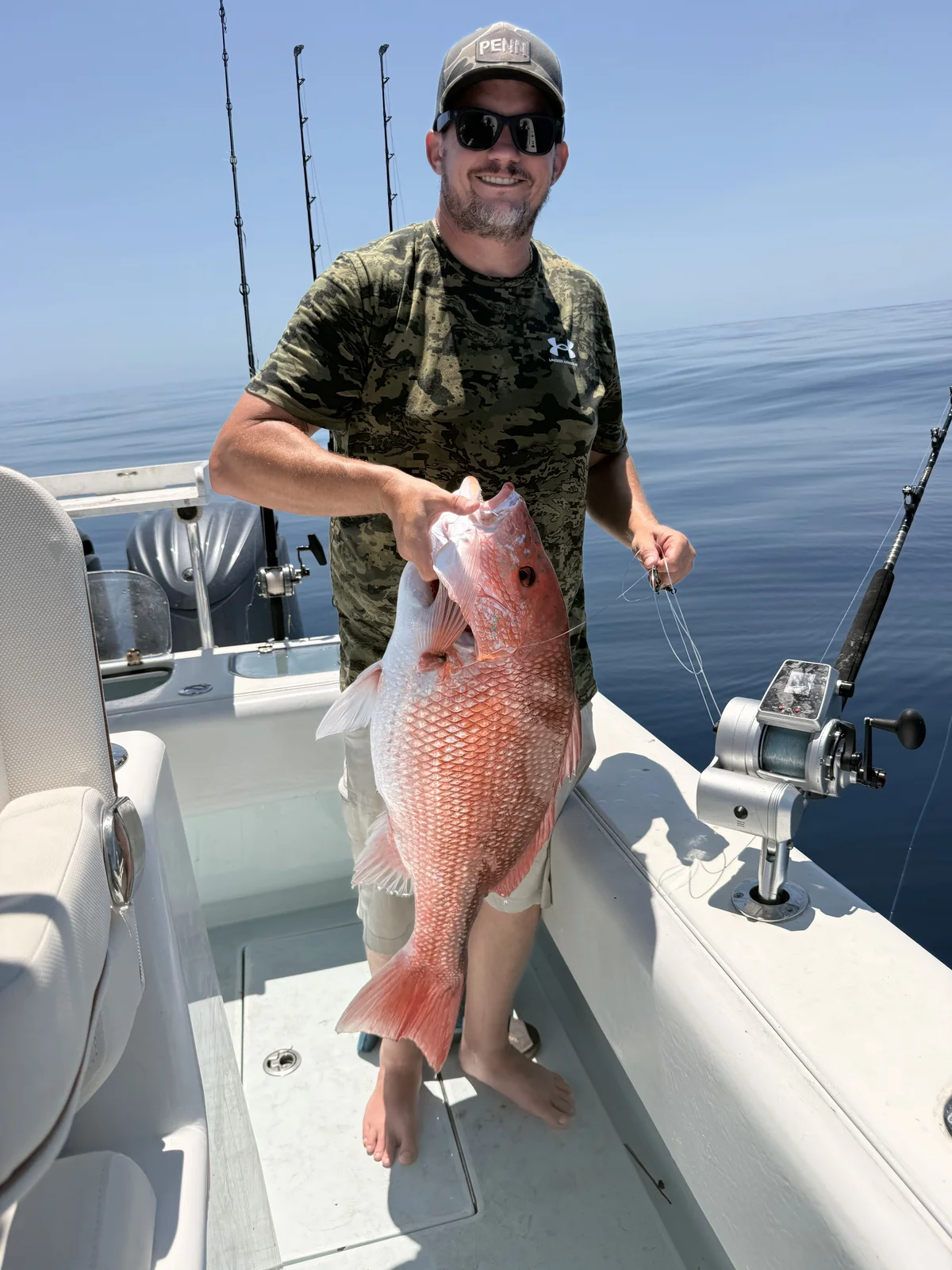
I run the Alijos 16II loaded with 80 lb braid under a 100 lb mono top shot — braid-era capacity math in action, with the top shot handling the stretch and abrasion where the business happens. On my boat these are dead-bait reels, and the biggest test they’ve gotten so far was a 50-pound wahoo that the 16II handled without breathing hard — a fish that empties spools and exposes grabby drags, and the Alijos treated it like a routine retrieve.
Could it take a real yellowfin? That’s what everyone asks, and the spec sheet answers it: 34 lb of strike drag on 80 lb braid is genuine tuna-stopping pressure, and the two-speed low gear is there for the straight-up-and-down end of that fight, same as any big reel. The fish pulls against the drag, not the frame size. The angler is who notices the difference — less weight held against the fish, a frame your hand actually fits around, a reel that balances on the rod instead of hanging under it.
Why it wins the dead-bait job specifically
Dead-bait trolling is an interactive fishery — dropping baits back, feeding fish, constant handling. That’s exactly where the compact frame pays:
- Weight: a spread of six outfits gets rigged, moved, cleared, and re-set all day. Light reels turn that from a chore into nothing.
- Handling: dropping a ballyhoo back to a hesitant fish with a reel that sits in your palm is simply easier than doing it around a wide-frame spool.
- Rod pairing: the compact reel matches a lighter, more sensitive trolling rod — you feel the bait, the weeds, and the tap that a heavy outfit numbs out.
- Crew-proof: lighter outfits are friendlier to the smallest and newest anglers on the boat, and the fish don’t grade your tackle.
On my boat the Alijos owns the dead-bait spread while the Makaira 50s and 80s handle the high-speed and planer work — the heavy reels where sustained load justifies the mass, the compact reels everywhere it doesn’t.
The honest comparison with the old guard
A traditional Penn International 30 or 50 is still a great reel — nothing about it stopped working. What stopped making sense is paying for and carrying capacity and frame you no longer need. The legacy reel still wins for one job: sustained maximum-drag work — the high-speed program and planer duty — where extra frame is heat sink and rigidity. For everything else in a dead-bait spread, the compact two-speed does the same work at half the weight, and once you’ve fished a season this way, picking a 30-wide back up feels like borrowing someone’s anchor.
Bottom line
The Alijos is what dead-bait trolling reels look like now: big-tuna drag, two-speed insurance, braid-era capacity, and a frame that makes the whole day easier. If your rod locker still assumes 1995’s capacity math, this is the reel that will change your mind — it changed mine.
This article may contain affiliate links. If you buy through them, we may earn a small commission at no extra cost to you. Learn more.